

If you've been feeding your own sourdough starter and wondering what to do with the leftover discard, this no knead sourdough bread is one of the easiest and most satisfying bread recipes you can try.

Whether it’s your first time baking or, like me, you love bread coming out of the oven, this recipe delivers great results with minimal effort.

I have used whole wheat flour, white bread flour, and purpose flour, with a touch of commercial yeast to speed up the fermentation process. This isn’t your typical artisan sourdough that takes days of care—this is a sourdough version for the time-strapped home baker like myself.

Why This Easy Sourdough Bread Recipe Works
Using your ripe sourdough starter discard alongside instant yeast gives this homemade bread a mild tang, enhanced by the lactic acid bacteria in the discard. Rising at room temperature allows the bread dough to develop a complex flavor and chewy texture.

At the same time, a final bake in a preheated Dutch oven gives it that iconic crusty exterior. No sourdough? It's ok, I have a version without it. I try to allow use my discard so it doesn't go to waste.
How I Make My Bread
This is how I make my bread. I know some people will disagree but I have found it easier to mix it when I break it into 3 parts. This bread took me about 5 hours start to finish to make, but it will depend on the warmth of your kitchen.
Time it Took Me
- Mixing - 10 minutes
- Folding Wait Time - 45 minutes
- First Rise - 2 hours
- Second Rise - 1 hour
- Cook Time -35 minutes
This is a little different for everyone due to the warm climate in the kitchen and the oven. I always say make it once and then adjust for a great loaf of bread.
With Sourdough Discard
First Mix
½ cup sourdough discard
2 teaspoons instant yeast
1 cup warm water
2 cups bread flour
Second Mix
1 ½ cups bread flour
Third Mix
½ cup warm water
2 teaspoons salt
Without Sourdough Discard
You don't need sourdough to make this bread, and the steps are the same; just the ingredients change.
First Mix
½ tablespoon instant yeast
1 cup warm water
3 cups bread flour
Second Mix
1 cup all-purpose flour
Third Mix
¾ cup warm water
2 teaspoons salt
My Method of Making Dough
1. Mix the Dough
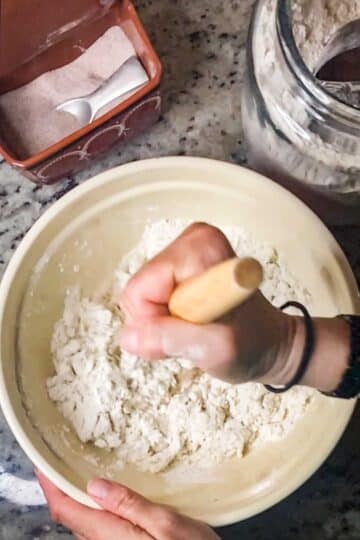
First Mix - In a large mixing bowl, combine everything from the First Mix with a wooden spoon or dough whisk until a very wet dough forms. It will be a little sticky—don’t worry, that’s normal!


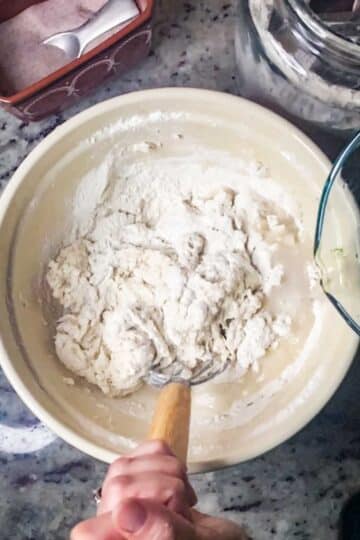
Second Mix - Add the ingredients and continue to mix. I do this by the sink so I can wet my hands, which is an easy way for me to handle the dough while mixing.


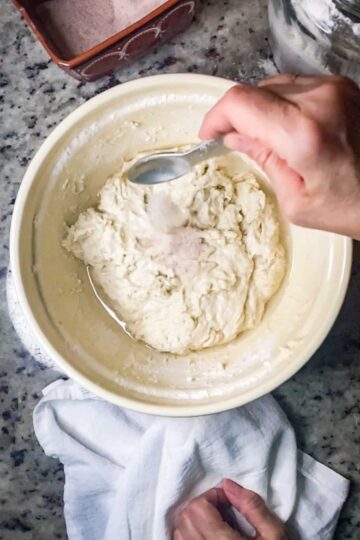
Let the dough rest for about 10 minutes, and add salt with a little water, then squeeze it into the dough and continue to mix. Now cover the dough and let it rest for 10 minutes,


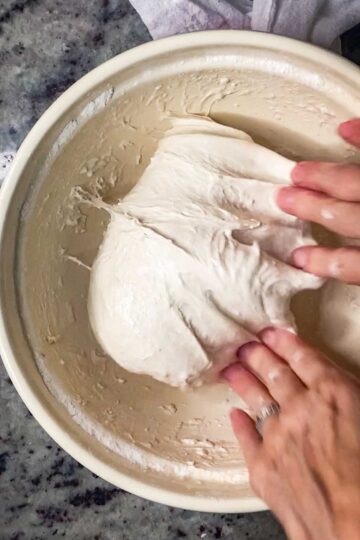
- 1st Fold - Stretch the dough out and fold it over as you rotate the bowl to do it 4 times. Then cover, rest for 15 minutes.
- 2nd Fold - Repeat.
- 3rd Fold- Repeat


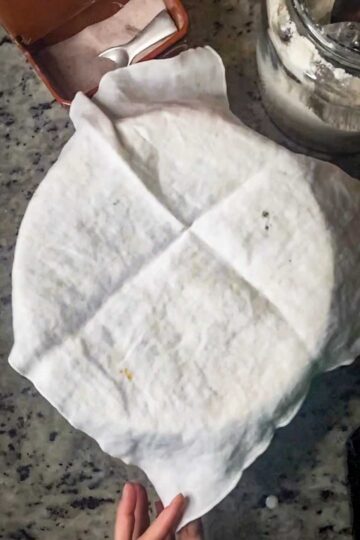
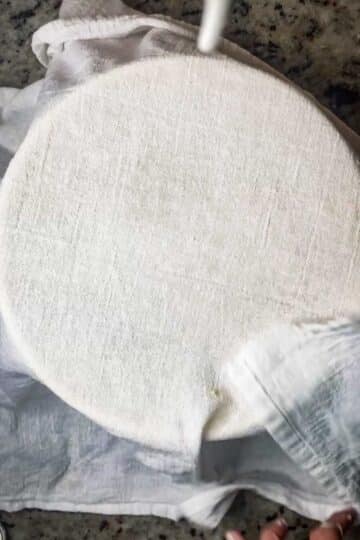
First Rise - Cover with plastic wrap or a kitchen towel and let the bulk fermentation begin. Leave it at room temperature for 1-2 hours.
2. Shape the Dough
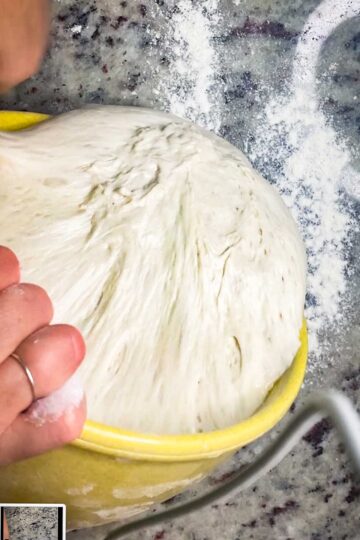
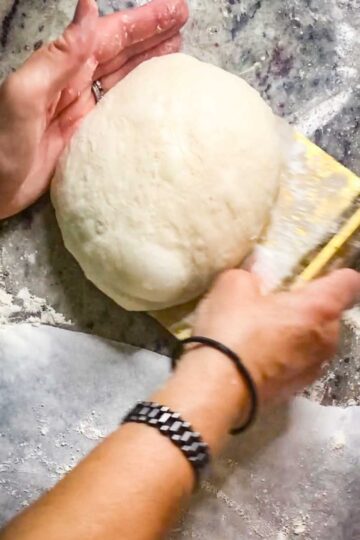
Flour your work surface lightly. Use wet hands, a bench scraper, or a dough scraper to gently turn out the dough. Try not to play with it too much so it doesn't lose its bubbles.


Let it rest for 10-15 minutes, then shape it tightly into a round or oblong shape. Place it seam side down on parchment paper. Watch the video if you need more visuals.


Second Rise - Cover again and allow for a second rise, which is about 1-2 hours, depending on your kitchen temperature.
3. Preheat & Bake
About 45 minutes before baking, place your Dutch oven (or other baking vessel) in the oven and preheat to 400°F (232°C).


Once your risen dough is ready, carefully lift it (using the parchment) into the hot Dutch oven. Score the top of the dough with a razor blade or sharp knife. Add about 3 tablespoons of water to the side of the parchment paper to the bottom. Move your oven rack so the Dutch oven fits evenly in the center of the oven.
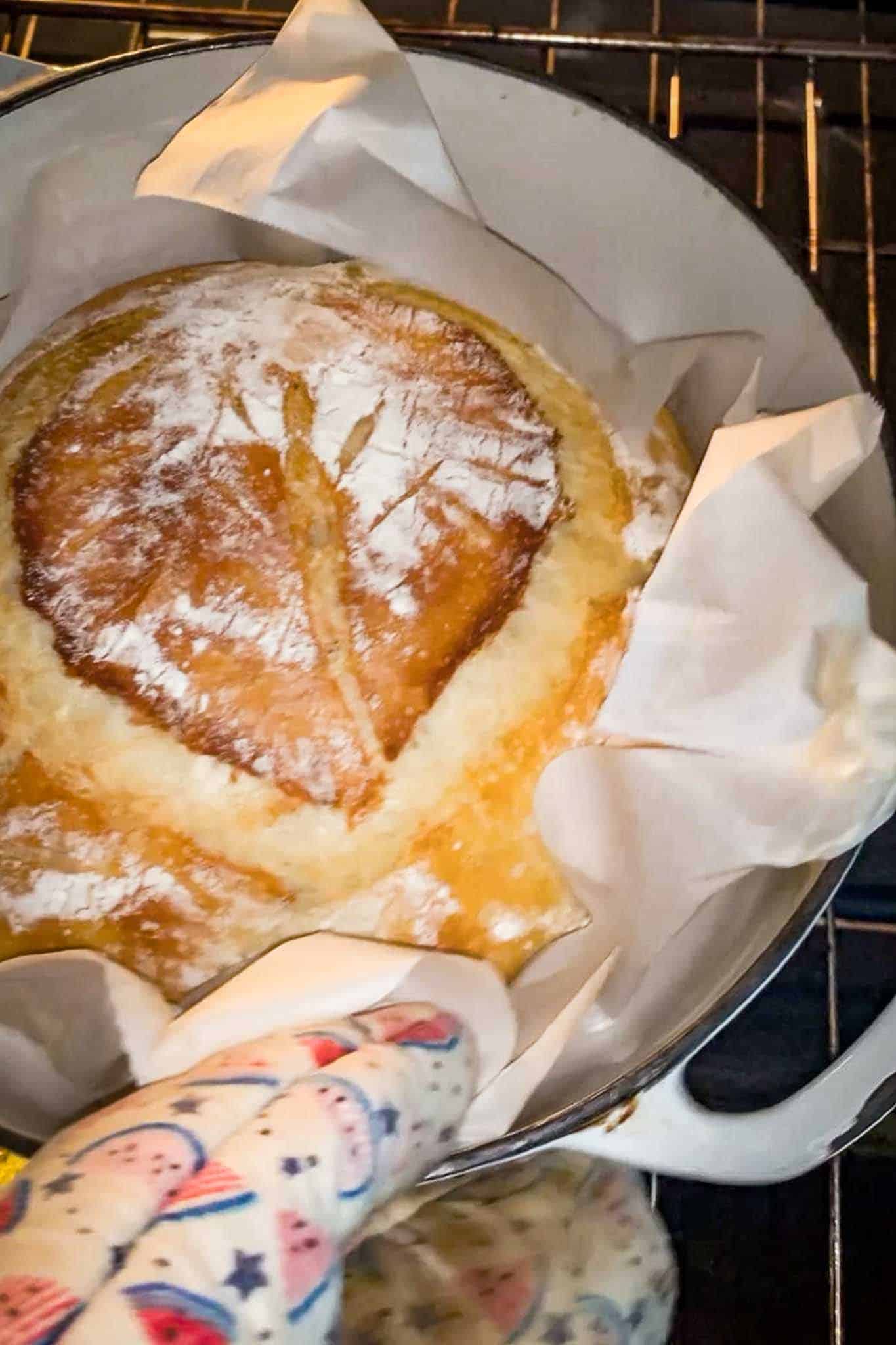
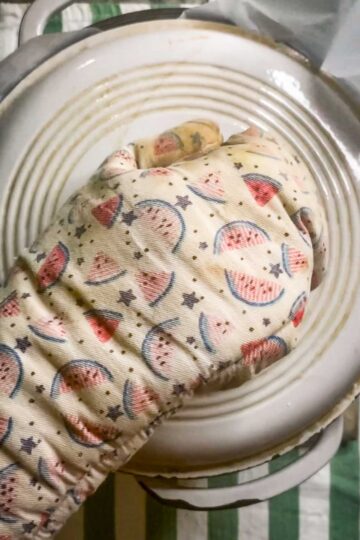
Bake covered for 20 minutes, then uncover and bake for an additional 15-20 minutes, or until deep golden brown.
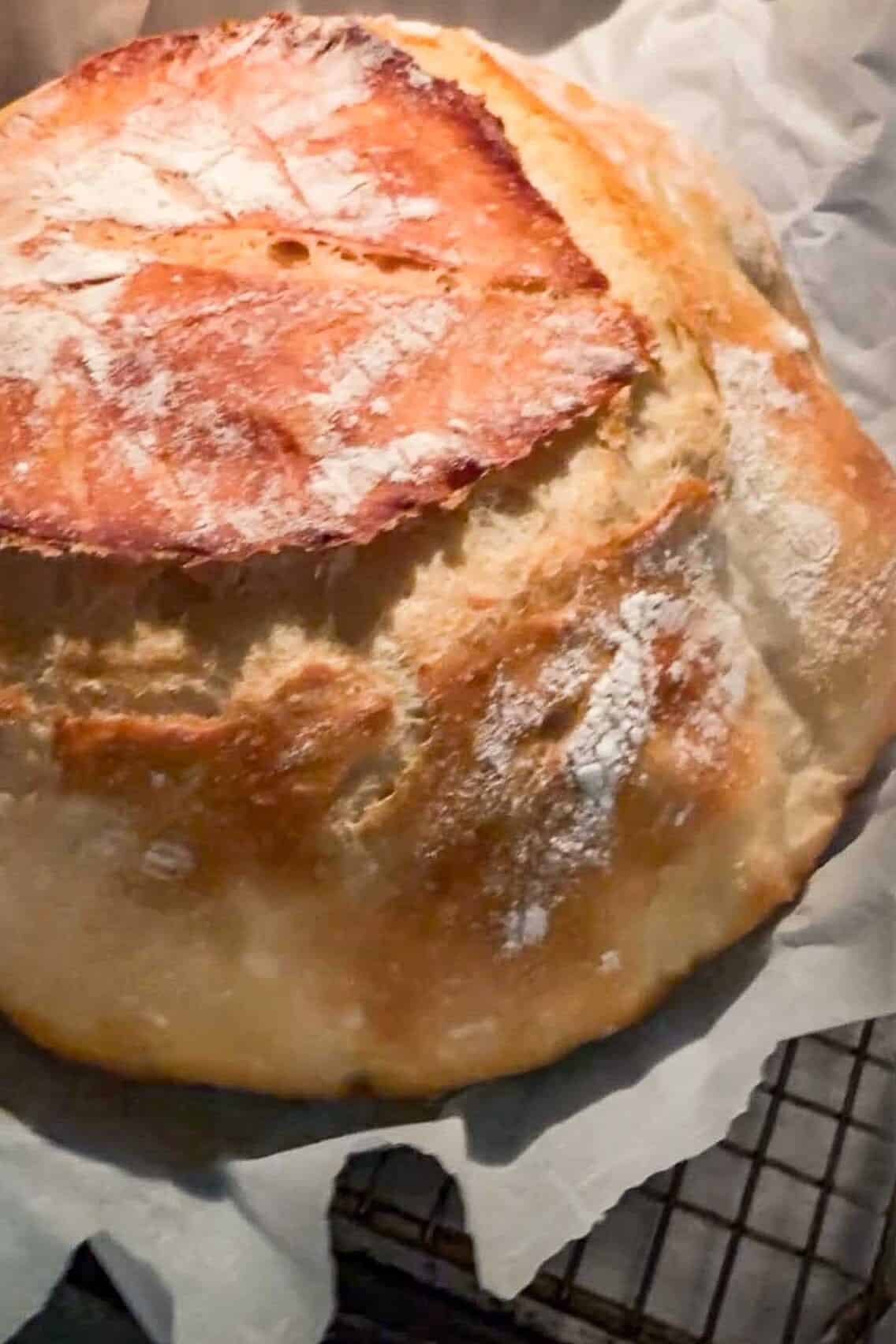
4. Cool & Enjoy
Remove the loaf to a cooling rack and let it rest for at least an hour. Slicing too early traps steam and can gum up the crumb. You’ll be rewarded with a beautiful sourdough loaf that’s crusty on the outside and soft inside.
Bonus Tips
- For best results, heat the Dutch oven first for at least an hour
- Store leftover bread in a plastic bag or wrap it in foil.
- Want to add more whole grains? Swap in more whole wheat flour or rye next time.
- Try baking half of the dough if your Dutch oven is small, or bake the other half in a loaf pan.

Some Items For This Recipe
As an Amazon Associate, I may earn a small commission from qualifying purchases through affiliate links at no extra cost to you—thank you for supporting this site! Explore all of my Amazon Storefronts or purchase items for this recipe.

Why Make Bread?
This beginner sourdough bread is perfect for anyone curious about sourdough recipes but short on time. Inspired by the Sam Sifton no knead method with an artisan quality.

Even if you usually grab your bread from the grocery store, this method will have you baking like a professional baker. Next time you feed your starter, don’t toss that discard—turn it into a warm, crusty loaf of bread.
Bread & Religion
Bread is known as a gift from God in most religions. When Moses fed his people in the desert with food that fell from heaven. Then there is Jesus, and during the last supper, when bread became the body of Christ, bread became a sign of sharing.
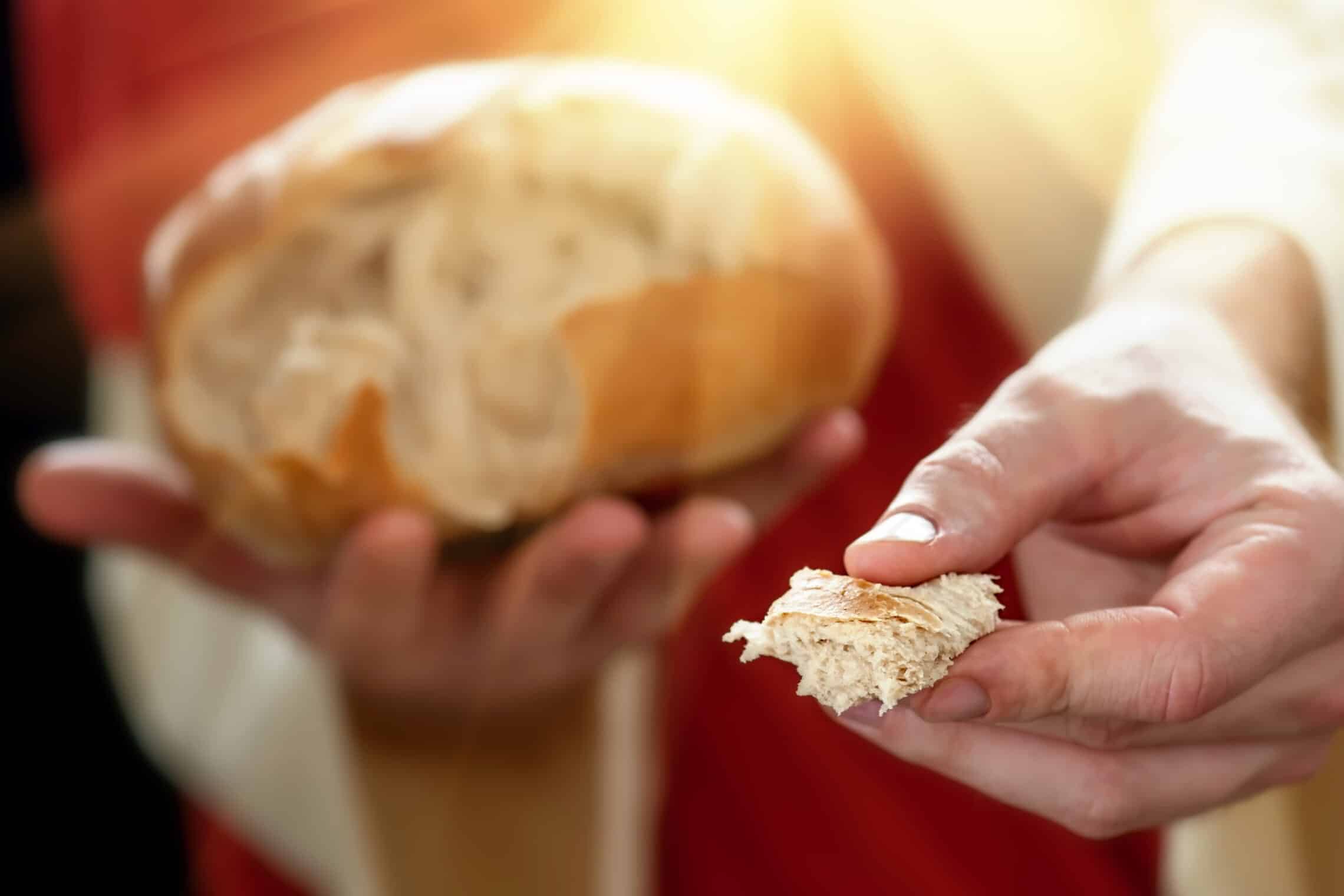
It also symbolized the Word of God, which nourished the crowds. Throughout history, bread has been used as a metaphor to become a vehicle of transition from grain to spiritual life.
Breads Around the World for Christmas
- Cozonac from Romania
- Vanocka from Czech
- Stollen from Germany
- Grittibänz from Switzerland
- Julekake from Norway
It is the most sacred food in religious practice, which is why during Christmas, there are so many different Christmas breads in different countries. Which is why I try to make a fresh loaf on Christmas morning.
More Sourdough Recipes Around the World


Have questions or need help adjusting your water content for different flours? Let me know in the comments! I have been making bread for about 4 years and still love it. I've made many mistakes which have turned into crotons or breadcrumbs, so don't worry if it's not great the first time.

Once you master this technique, you will never buy bread again; it's just too easy and delicious. I hope you try this no knead sourdough bread discard. Nothing beats fresh bread just out of the oven with a little butter on a Sunday afternoon. Hope you enjoyed our journey today in exploring no knead sourdough bread. Until next time, my beautiful friends, as my quest for the perfect bite continues!

No Knead Sourdough Bread for Beginners
Ingredients
WITH SOURDOUGH DISCARD
First Mix
- ½ cup sourdough discard
- 2 teaspoons instant yeast
- 1 cup warm water
- 2 cups bread flour
Second Mix
- 1 ½ cups bread flour
Third Mix
- ½ cup warm water
- 2 teaspoons salt
WITHOUT SOURDOUGH - YEAST
First Mix
- ½ tablespoon instant yeast
- 1 cup warm water
- 3 cups bread flour
Second Mix
- 1 cup all-purpose flour
Third Mix
- ¾ cup warm water
- 2 teaspoons salt
Instructions
Mix the Dough
- First Mix - In a large mixing bowl, combine everything from the First Mix with a wooden spoon or dough whisk until a very wet dough forms. It will be a little sticky—don’t worry, that’s normal!

- Second Mix - Add the ingredients and continue to mix. I do this by the sink so I can wet my hands, which is an easy way for me to handle the dough while mixing.
- Let the dough rest for about 10 minutes, and add salt with a little water, then squeeze it into the dough and continue to mix. Now cover the dough and let it rest for 10 minutes,
Fold Dough
- 1st Fold - Stretch the dough out and fold it over as you rotate the bowl to do it 4 times. Then cover, rest for 15 minutes. 2nd Fold - Repeat. 3rd Fold- Repeat
First Rise
- Cover with plastic wrap or a kitchen towel and let the bulk fermentation begin. Leave it at room temperature for 1-2 hours.
Shape the Dough
- Flour your work surface lightly. Use wet hands, a bench scraper, or a dough scraper to gently turn out the dough. Try not to play with it too much so it doesn't lose it's bubbles.
- Let it rest for 10-15 minutes, then shape it tightly into a round or oblong shape. Place it seam side down on parchment paper. Watch the video if you need more visuals.
Second Rise
- Cover again and allow for a second rise, which is about 1-2 hours, depending on your kitchen temperature.
Preheat & Bake
- About 45 minutes before baking, place your Dutch oven (or other baking vessel) in the oven and preheat to 400°F (232°C).
- Once your risen dough is ready, carefully lift it (using the parchment) into the hot Dutch oven. Score the top of the dough with a razor blade or sharp knife. Add about 3 tablespoons of water on the side of the parchment paper to the bottom. Move your oven rack so the Dutch oven fits evenly in the center of the oven.
- Bake covered for 20 minutes, then uncover and bake for an additional 15-20 minutes, or until deep golden brown.

Cool & Enjoy
- Remove the loaf to a cooling rack and let it rest for at least an hour. Slicing too early traps steam and can gum up the crumb. You’ll be rewarded with a beautiful sourdough loaf that’s crusty on the outside, and soft inside.

Notes
- For best results, heat the Dutch oven first for at least an hour
- Store leftover bread in a plastic bag or wrap it in foil.
- Want to add more whole grains? Swap in more whole wheat flour or rye next time.
- Try baking half of the dough if your Dutch oven is small, or bake the other half in a loaf pan.
Sherry says
I finally tried this recipe and it was so easy!!!
Lizzy says
So glad you enjoyed! xoxo Lizzy